


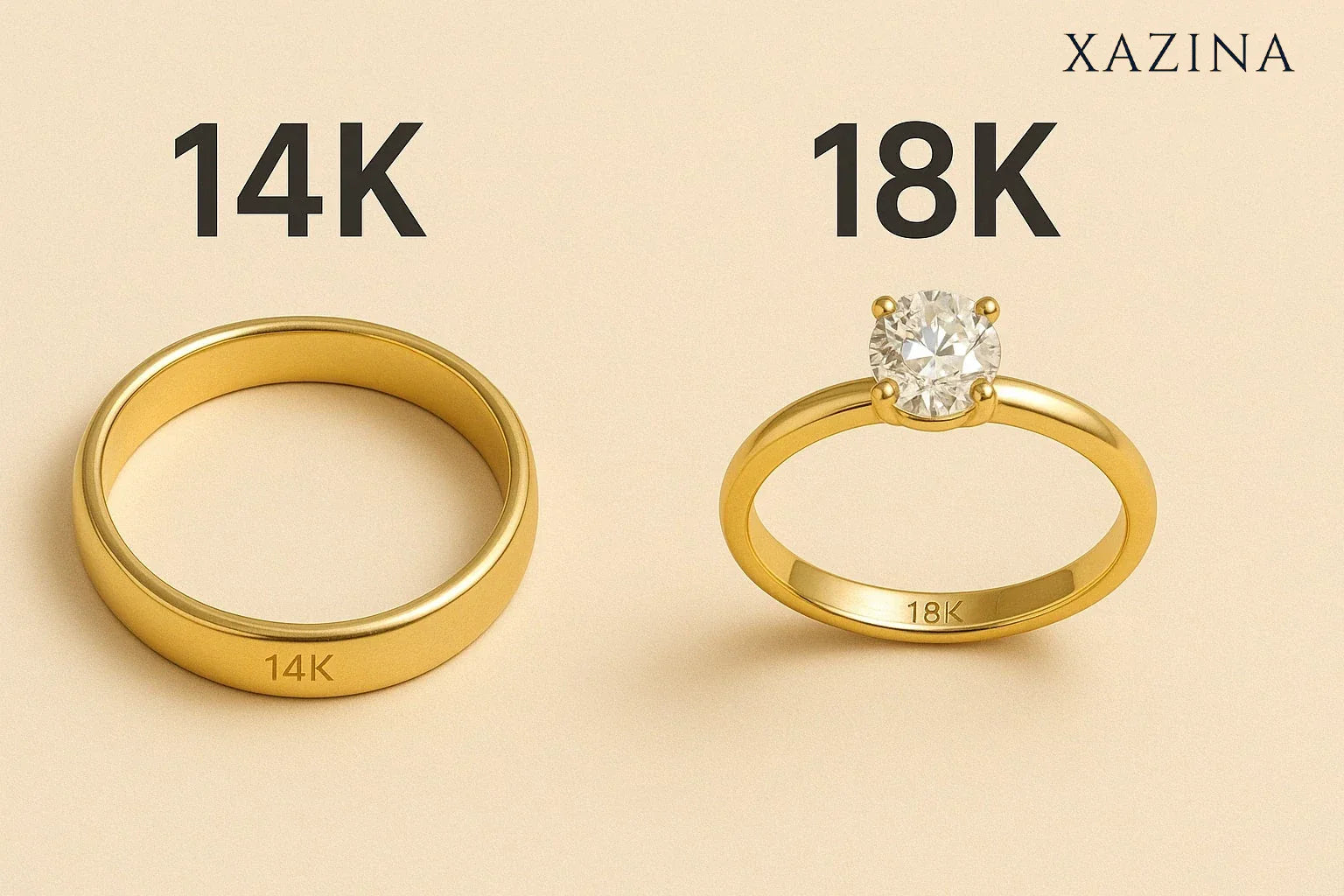
Introduction: Why Gold Purity Matters
Understanding gold purity is essential before you buy because every choice you make depends on how clearly you can interpret 14k gold purity, 14k purity, 14 ct gold purity, 14 carat gold purity percentage, 18k gold purity, 18k gold purity percentage, 18 carat gold purity percentage, the meaning of the 18k hallmark, and the purpose of the 18 carat gold number. Most buyers compare 14k purity and 18k gold purity because each offers a different balance of durability, value, and long-term wear. Knowing the exact 14 carat gold purity percentage and 18 carat gold purity percentage helps you avoid confusion, especially when the 18k hallmark and 18 carat gold number appear on jewelry you’re evaluating. When you understand how 14k gold purity differs from 18k gold purity, you make smarter decisions and avoid paying for purity levels you don’t actually need.
What Carat Means in Gold Purity
Carat simply measures how much pure gold is present in any piece of jewellery. This matters because it affects the 14 ct gold purity, 14k gold purity, 14k purity, and the overall 14 carat gold purity percentage you get in 14K gold. The same idea applies to 18K gold, where the 18 carat gold number tells you how much pure gold is included and how the 18k gold purity, 18k gold purity percentage, and 18 carat gold purity percentage compare to 14K.
When you see a stamp like the 18k hallmark, it confirms that the piece meets the required 18 carat gold purity percentage. These markings help buyers quickly understand whether they’re looking at 14k purity or the higher 18k gold purity.
Most people searching “What is carat?” are trying to understand this exact difference: how the 14 ct gold purity compares to the richer 18 carat gold purity percentage, and what the 18 carat gold number on their jewellery actually means.
14K Gold Purity Explained
14K gold is one of the most popular choices for daily jewellery because its 14k gold purity and overall 14k purity give a good balance of strength and gold content. The 14 carat gold purity percentage shows how much pure gold is mixed with stronger alloy metals, making it ideal for regular wear without constant worry about scratches.
Quick Breakdown of 14K Gold
|
Feature |
Explanation |
|
14 carat gold purity percentage |
58.5% pure gold (commonly marked as 585) |
|
14k gold purity / 14k purity |
Mix of gold + alloy for durability |
|
Strength |
More durable than higher karats |
|
Colour |
Slightly lighter yellow than 18K |
|
Daily Use |
Very suitable for everyday wear due to its higher hardness |
Why 14K Works for Daily Wear
Because the 14k gold purity is lower than 18K, it contains more alloy, which increases durability. This makes 14K gold a practical choice if you want jewellery that can handle daily activities while still offering the warm look of gold. The solid 14-carat gold purity percentage ensures you get real value without sacrificing strength or long-term reliability.
18K Gold Purity Explained
18K gold is known for its rich colour and higher purity, which is why buyers often check the 18 carat gold purity percentage, 18k gold purity percentage, and overall 18k gold purity before purchasing. With a higher level of pure gold than 14K, 18K offers a more luxurious appearance, making it popular for engagement rings, bridal jewellery, and premium designs.
Quick Breakdown of 18K Gold
|
Feature |
Explanation |
|
18 carat gold purity percentage |
75% pure gold (commonly marked as 750) |
|
18k gold purity / 18k gold purity percentage |
Higher purity than 14K with more gold content |
|
Colour |
Warmer, deeper yellow tone |
|
Strength |
Softer than 14K but still suitable for occasional to moderate daily use |
|
Hallmarking |
Usually stamped with the 18k hallmark or the 18 carat gold number “750” |
What the 18K Hallmark Confirms
The 18k hallmark guarantees that the jewellery contains the stated 18 carat gold purity percentage, meaning 75% of the piece is pure gold. Seeing this hallmark or the 18 carat gold number ensures authenticity and helps buyers verify quality without guesswork.
Why Buyers Choose 18K
People who want richer colour, higher purity, and premium feel often choose 18K gold. The confirmed 18k gold purity and 18k gold purity percentage make it a top choice for those willing to invest in jewellery that looks luxurious and carries higher gold value.
14K vs 18K Gold: Which Should You Choose
Choosing between 14K and 18K gold usually comes down to understanding the real differences in durability, colour, price, and wearability. Since buyers often compare 14k gold purity, 14k purity, and the 14 carat gold purity percentage with the higher 18k gold purity, 18k gold purity percentage, and the 18 carat gold purity percentage, the decision becomes easier when you see how each performs in daily life.
Durability
14K gold wins here. Its lower 14k gold purity means more alloy is mixed in, making it harder and more resistant to scratches.
18K gold, with its higher 18k gold purity and 18 carat gold purity percentage, is softer and can scratch more easily. If you’re rough with your jewellery, 14K handles wear better.
Colour
18K gold offers a richer, deeper yellow because of its higher 18k gold purity percentage.
14K gold looks slightly lighter due to its lower 14 carat gold purity percentage.
Price
18K gold is more expensive because of its higher 18k gold purity and the value tied to its 18 carat gold purity percentage. 14K gold is more budget-friendly while still offering a strong gold appearance.
Cultural Preference
Some cultures prefer the deeper tone of 18K and rely on the 18k hallmark or the 18 carat gold number (750) to confirm authenticity. Others choose 14K for practicality, durability, and everyday comfort based on the trusted 14k purity and 14 ct gold purity values.
Which One Should You Choose?
Choose 14K if you want durable, affordable, daily-wear jewellery backed by a reliable 14k gold purity level. Choose 18K if you want richer colour, higher purity, and premium appeal supported by the 18k hallmark and higher 18 carat gold purity percentage.
How Hallmarking Works and Why It Matters
Hallmarking is the official process of verifying gold purity, and it plays a major role when buyers check the 18k hallmark, the 18 carat gold number, and the accuracy of the 18 carat gold purity percentage, 18k gold purity, and 18k gold purity percentage. A hallmark confirms that the jewellery you’re buying truly matches the purity level promised, which is especially important when comparing 14K and 18K gold.
What the 18K Hallmark Confirms
The 18k hallmark guarantees that the piece contains the correct 18 carat gold purity percentage, which is 75% pure gold. This hallmark also verifies the 18 carat gold number (usually 750), allowing buyers to trust the stated 18k gold purity without relying solely on the seller’s claims.
BIS Hallmarking (India)
In India, BIS hallmarking is the official standard. BIS tests the metal and certifies whether the 18k gold purity percentage and 18 carat gold purity percentage are accurate. When you see a BIS-certified 18k hallmark, you know the purity has been independently verified.
International Standards
Outside India, countries follow their own hallmarking systems, but the idea remains the same: the 18k hallmark and 18 carat gold number confirm whether the jewellery truly carries the advertised 18k gold purity.
Why Hallmarking Matters
Hallmarking protects buyers from fraud, ensures that the 18k gold purity percentage is correct, and gives confidence that the gold meets legal standards. Whether you're evaluating 14k purity, 14 ct gold purity, or the higher 18 carat gold purity percentage, a hallmark is the simplest and most reliable way to confirm authenticity and value.
Carat Numbers and Markings You’ll See on Jewellery
Every gold piece carries a stamp that tells you its purity. For 14K jewellery, the marking is usually 585, which represents the 14 carat gold purity percentage, the 14k gold purity, and the overall 14k purity you’re paying for. For 18K jewellery, you’ll often see the 750 stamp, which reflects the 18k gold purity, the 18k gold purity percentage, and the official 18 carat gold number used worldwide. These markings help buyers confirm authenticity at a glance, especially when comparing 14 ct gold purity with the richer 18 carat gold purity percentage. You may also see the 18k hallmark, which further guarantees accuracy in purity and testing standards.u
Quick Bying Checklist
Use this simple checklist from Xazina to avoid mistakes and ensure you're buying genuine gold:
• Check the purity stamp: 585 for 14K, 750 for 18K.
• Look for the 18k hallmark or the 18 carat gold number when buying higher-purity jewellery.
• Confirm the 14 carat gold purity percentage or 18 carat gold purity percentage on the invoice.
• Ask for an authenticity certificate, especially for premium items.
• Compare 14k purity and 18k gold purity based on your lifestyle: durability vs richer gold content.
• Buy only from verified sellers who clearly explain purity and hallmarking.
Conclusion
Understanding the difference between 14k purity, 14k gold purity, and the full 14 carat gold purity percentage compared to the higher 18k gold purity, 18k gold purity percentage, and the 18 carat gold purity percentage helps every buyer make smarter decisions. Whether you're choosing classic gold pieces or pairing them with modern styles like a lab grown diamond necklace, a lab grown tennis bracelet, or diamond earrings for everyday wear, understanding purity ensures you get true value. Knowing how durability, colour, and the 18k hallmark affect your jewellery allows you to buy with confidence. For more clarity and reliable guidance, explore more gold and diamond buying insights from Xazina and make every purchase informed and secure.


