

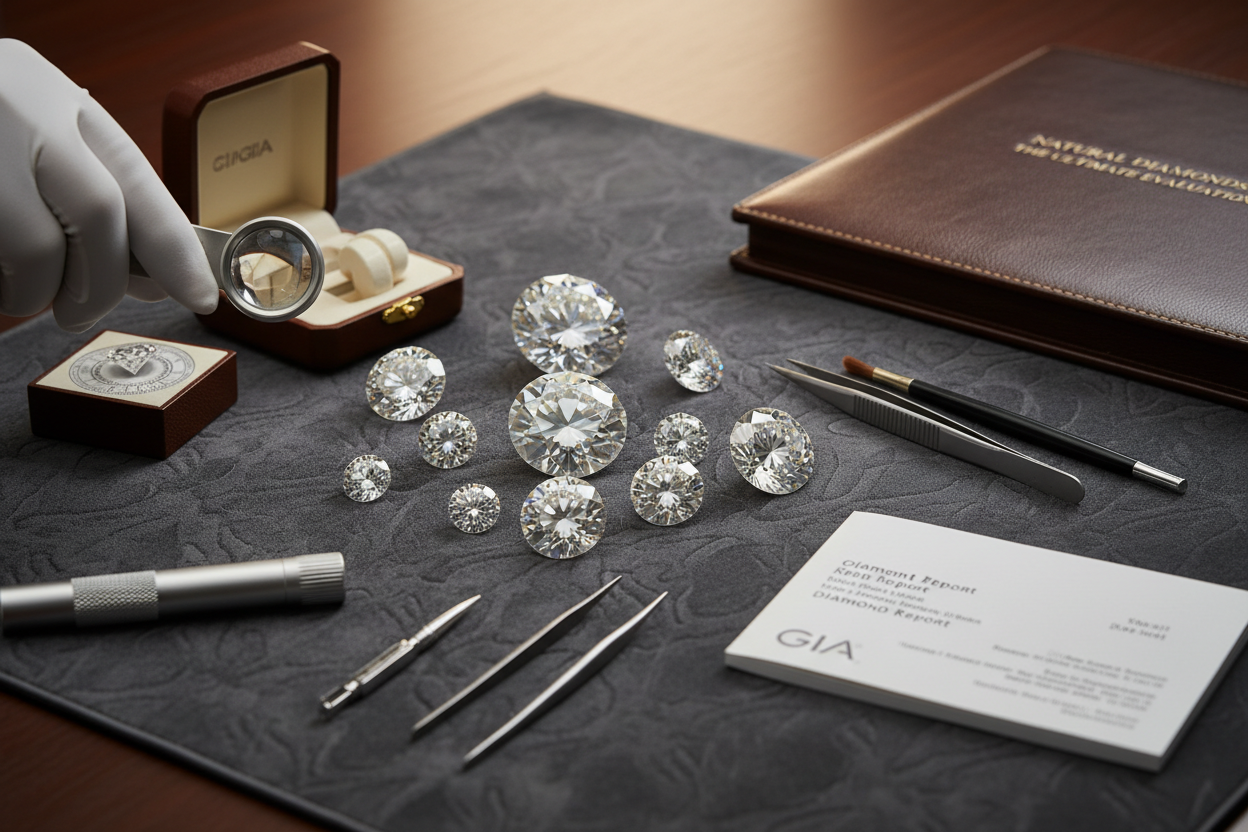
Getting the best value in natural diamonds means prioritising Excellent cut first, then eye-clean clarity, near-colourless colour grading, and strategic carat sizing - while demanding real GIA or IGI certification and verified ethical sourcing. Understanding what actually drives a natural diamond's price also explains why Xazina's lab-grown diamonds deliver identical quality at 40-70% lower cost.
The 4Cs, in Priority Order
Cut matters most - it determines over 60% of a diamond's visible sparkle through light return. Look for Excellent or Ideal proportions; avoid Good or Fair grades, which look noticeably duller regardless of how high the color or clarity grade is. A well-cut 0.8 carat stone will always outshine a poorly-cut 1.2 carat one.
Color ranges from D-F (premium colourless) to G-J (near-colourless, genuinely better value - the difference is invisible to the naked eye once set).
Clarity in the VS1-VS2 range means inclusions are only visible under a jeweller's loupe, never to the naked eye. SI1 can also work well if independently verified as eye-clean. Avoid I1 and below, where flaws are visible without magnification.
Carat should be balanced against the other three - a slightly smaller, better-cut stone almost always looks better and holds value better than a larger, poorly-cut one.
Why Natural Diamonds Command a Premium: Rarity Explained
Understanding rarity is what actually explains the price gap you'll see between natural and lab-grown stones.
Natural diamonds form 100-150 miles underground under extreme heat and pressure, and only reach the surface through rare volcanic kimberlite pipes - viable mining sites exist in just a few dozen locations worldwide. Of all rough diamond mined, roughly 20-30% is gem-quality; the rest goes to industrial use. Within that gem-quality output, top grades - D color, flawless or internally flawless clarity, excellent cut - occur in under 1% of production. Rare colours like fancy pinks or blues are closer to 1 in 10,000 stones.
This is exactly why lab-grown diamonds can offer the same visual brilliance at a meaningfully lower price - they replicate the same carbon structure without depending on that geological scarcity.
Certification: Non-Negotiable
A genuine GIA or IGI report verifies the 4Cs, fluorescence, and any treatments, and includes a plot diagram mapping the stone's inclusions. Be cautious of "clarity enhanced" stones without full disclosure, and never buy a diamond with no certificate at all - it's one of the most common ways buyers end up with something other than what they were told.
Ethical and Provenance Checks
- Look for Kimberley Process compliance as a baseline conflict-free guarantee
- Prefer stones with clearly disclosed origin over undisclosed sourcing
- Check fluorescence under UV - faint or none is ideal; strong fluorescence can create a hazy look in higher color grades (D-G)
Choosing the Right Shape for Value
Fancy shapes like oval, cushion, and pear tend to offer better visual size per carat than round brilliants, which carry a premium for their cutting complexity and universal popularity.
Retailer Red Flags
Trust sellers who offer verifiable certification, a clear return policy, and independent appraisals. Be wary of "in-house" certificates, high-pressure sales tactics ("limited stock" urgency), and anyone unwilling to let you check a stone under UV light before buying.
Natural vs Lab-Grown: The Value Reality
| Factor | Natural Diamond | Xazina Lab-Grown |
| Sparkle / 4Cs | Variable, nature-dependent | Consistent, lab-optimised |
| Ethics | Kimberley Process (some risk remains) | 100% conflict-free by origin |
| Environmental impact | High - large-scale mining | Minimal |
| Price for comparable quality | Premium, rarity-driven | 40-70% lower |
Pro Buying Checklist
- Allocate your budget roughly 50% to cut and carat, 30% to color and clarity, 20% to setting
- Inspect in daylight and under UV, and use a 10x loupe to check for visible inclusions
- Verify the certificate's serial number online before purchasing
- Get everything - return policy, appraisal, certification - in writing
- Favour classic, versatile settings over highly trend-driven designs
FAQs: Buying a Diamond for Real Value
Which of the 4Cs should I prioritise if I have to choose?
Cut, by a wide margin - it has the biggest single impact on how bright and lively a diamond actually looks, more than color or clarity.
Is a slightly smaller, better-cut diamond really a better buy than a bigger one?
Usually, yes. A well-cut smaller stone reflects more light and looks more impressive day-to-day than a larger stone with a mediocre cut.
Why can lab-grown diamonds offer the same quality for less?
They're not competing with geological scarcity - the same carbon structure, without needing to be one of the rare gem-quality finds nature produces.


