Introduction: Is a Solitaire a Diamond?
Is a solitaire a diamond? The short answer is: Yes, usually—but not all diamonds are solitaires.
If you are shopping for an engagement ring, the terminology can get confusing fast. One of the most common questions jewelers face is the solitaire vs diamond comparison. It sounds like a choice between two different gemstones, but it is actually a choice between a material and a design.
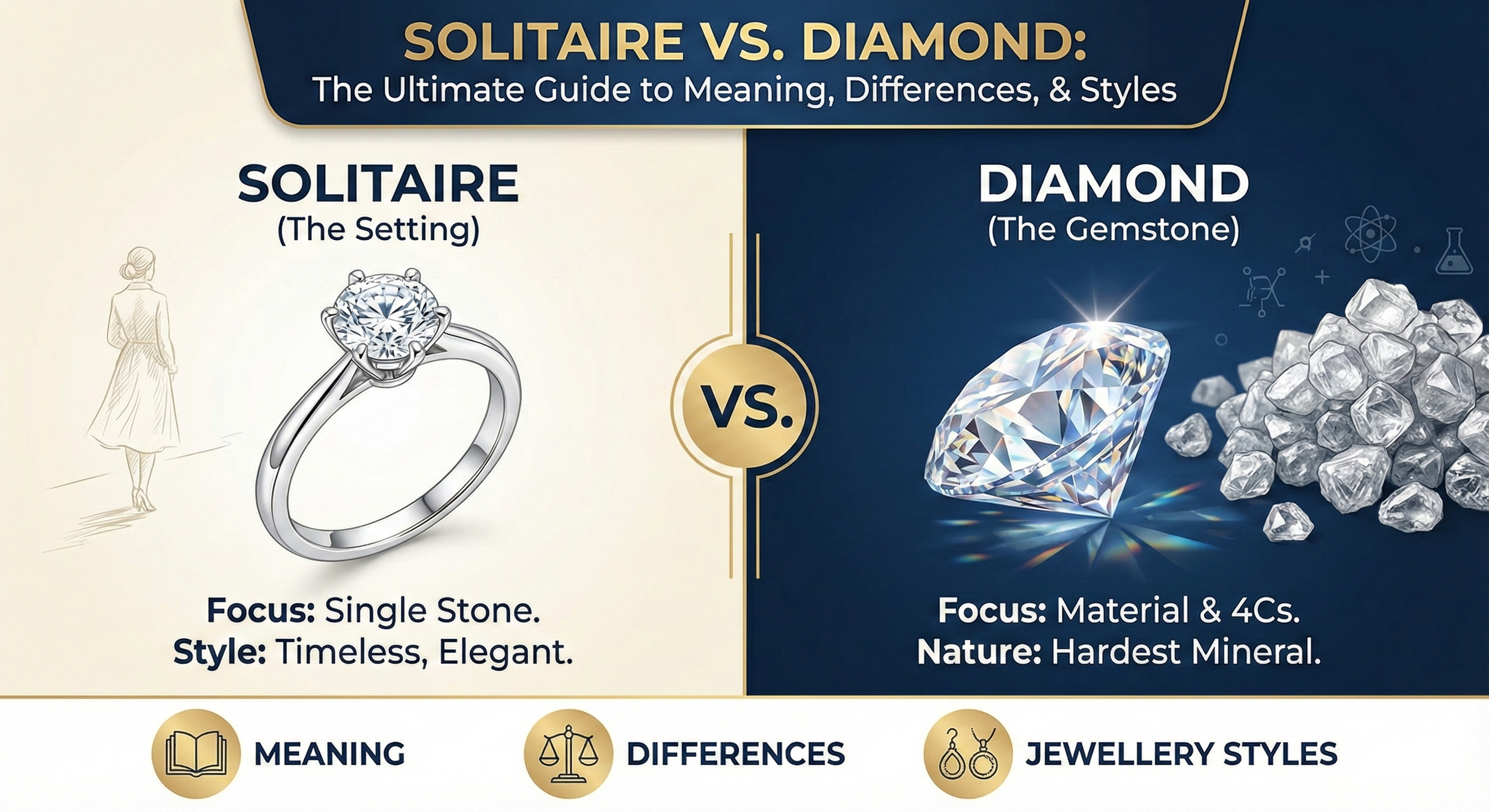
To clear the confusion immediately: Diamond refers to the gemstone itself—the hardest natural substance on Earth, valued for its 4Cs (Cut, Color, Clarity, Carat). Solitaire, on the other hand, refers to the setting style.
The word "solitaire" comes from the French word for "alone." In jewellery terms, it means a single gemstone mounted on a piece of jewellery (like a ring, necklace, or earring) without any side stones or pavé diamonds distracting from it. Therefore, the main solitaire and diamond difference is that one is the rock, and the other is the way the rock is showcased. You can have a solitaire diamond, a solitaire sapphire, or even a solitaire moissanite-as long as it is a single stone standing alone, it is a solitaire.
What is a Solitaire Diamond? Understanding the Meaning
When people ask, "What is a solitaire diamond?", they are often looking for a specific shape or cut of stone. However, the definition is actually much simpler and lies in the history of the word itself.
The term "solitaire" is derived from the French word for "alone" or "solitary." In the world of fine jewellery, solitaire meaning diamond implies a design where a single diamond is mounted on the band to stand completely on its own. There are no side stones, no halo of smaller diamonds, and no intricate pavé detailing along the shank. The entire purpose of this design is to focus the eye exclusively on the center stone.
This leads us to the precise solitaire diamond meaning: It is a jewellery piece featuring one singular diamond that acts as the sole focal point. Because there are no other gemstones to distract the eye or hide imperfections, the center stone in a solitaire setting usually needs to be of higher quality—specifically regarding its Cut and Clarity—to ensure it sparkles brilliantly without help from surrounding stones.
A Crucial Distinction: It’s Not Just About Diamonds
While the term is most famous in the context of engagement rings, it is important to note that "solitaire" is a category of setting, not a category of stone. You can have a:
Ruby Solitaire: A single red ruby set on a band.
Sapphire Solitaire: A single blue sapphire pendant.
Diamond Solitaire: The classic single diamond ring.
So, while solitaire meaning diamond is the most common association due to the popularity of engagement rings, the term strictly refers to the "Power of One"—one stone, standing alone, showcasing its unfiltered beauty.
Difference Between Solitaire and Diamond: A Detailed Breakdown
To fully grasp the difference between solitaire and diamond, you have to separate the components from the composition. It is easy to use the words interchangeably, but in the jewelry industry, they refer to two completely distinct aspects of a ring.
The Diamond: The Gemstone
The diamond is the actual stone—the raw material. It is the hardest natural substance on Earth and is valued based on its quality. When you are assessing a diamond, you are looking at the 4Cs:
Cut: How well the stone interacts with light (sparkle).
Color: How white or colorless the stone is.
Clarity: The presence (or absence) of internal flaws or inclusions.
Carat: The physical weight of the stone.
Whether a diamond is sitting loose in a paper envelope or mounted on a ring, it remains a diamond.
The Solitaire: The Presentation
The solitaire is the style of setting used to hold that gemstone. It is the "architecture" of the ring. A solitaire setting is designed to hold only one stone. It doesn't matter if that stone is a 0.5-carat diamond or a 5-carat diamond; if it sits alone on the metal band, the ring is a solitaire.
The Perfect Analogy
To visualize the solitaire vs diamond relationship, use this simple analogy:
"Think of the diamond as the painting, and the solitaire setting as the frame."
The painting (diamond) is the piece of art you are admiring. The frame (solitaire) is the structure that holds it up and presents it to the world. You can have a painting without a frame, but you can't have a "framed painting" without the art inside.
In summary, the fundamental difference between solitaire and diamond is that one is the object of value, and the other is the method of displaying it. You choose the diamond for its brilliance, and you choose the solitaire setting for its timeless elegance.
Solitaire Jewellery Meaning: Beyond the Ring
While the solitaire engagement ring is the most iconic use of this setting, the solitaire jewellery meaning extends far beyond bridal wear. The concept remains the same across all categories: a single, stunning gemstone that acts as the centerpiece of the design. This minimalist approach is a favorite for those who value understated luxury.
Solitaire Earrings: The Ultimate Staple
Perhaps the most essential piece in any jewellery box is the diamond stud. In technical terms, these are solitaire earrings—a single diamond set in metal (usually prong or bezel) worn on the earlobe. Because they are simple, they are incredibly versatile, worn just as easily at the gym as they are at a black-tie gala. If you are looking to add this staple to your collection, you can browse lab grown Diamond Earrings Online to find pairs that offer maximum sparkle for a fraction of the mined price.
Solitaire Pendants: Elegance in Suspension
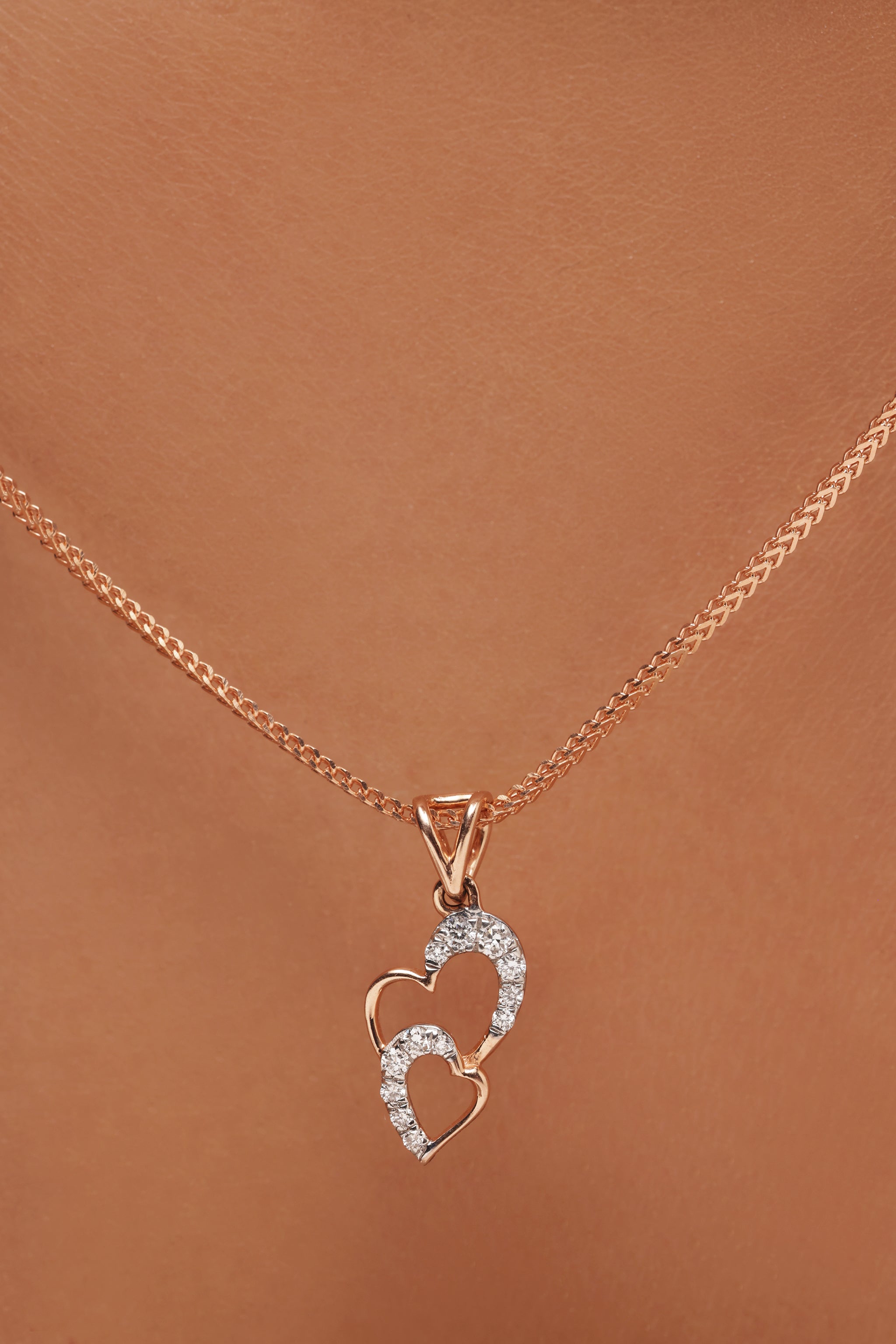
A solitaire pendant features a single diamond suspended from a chain, resting near the heart. Unlike cluster necklaces, which rely on many small stones to create volume, a lab grown diamond necklace in a solitaire style relies on the quality of that one stone to catch the light. It creates a focal point that is sophisticated and timeless.
Men’s Solitaire Rings & Modern Accessibility
The solitaire style isn't just for women. Men's solitaire rings—often featuring a single stone flush-set into a thicker, masculine band—are gaining immense popularity. Whether for men or women, the digital age has made these designs more accessible than ever. You can now easily compare cuts and styles of lab grown Diamond Solitaire Rings Online, allowing you to focus on the specifications of the stone from the comfort of your home.
Why Is the Solitaire Style So Popular?
The enduring appeal of Solitaire Diamond Jwellery lies in its honesty. There is nowhere for a poor-quality diamond to hide. The "meaning" of solitaire jewellery is ultimately about confidence-the confidence to let a single beautiful thing speak for itself without unnecessary decoration.
Pros and Cons: Should You Buy a Solitaire or a Multi-Stone Design?
Choosing between a solitaire and a multi-stone ring (like a halo or cluster setting) is one of the biggest decisions you will make during the shopping process. While solitaires are iconic, they aren't the only option. To help you decide, we’ve broken down the practical advantages and disadvantages based on real-world ownership experiences.
The Pros of Choosing a Solitaire
Timeless Appeal: Trends come and go (remember the square "princess cut" craze?), but the solitaire has remained fashionable for over a century. It is "future-proof" fashion.
Easier Maintenance: With only one gemstone and fewer metal prongs, solitaires trap less dirt and lotion than intricate multi-stone rings. They are significantly easier to clean and maintain over a lifetime.
Better Value Retention: Generally, a single large diamond holds its value better than a cluster of smaller diamonds that add up to the same weight. Large stones are rarer, making them a smarter long-term asset.
The Cons to Consider
Less "Visual" Size: A 1-carat solitaire will look smaller than a 0.5-carat center stone surrounded by a diamond halo. If your goal is maximum surface area and flashiness for a lower budget, a solitaire might feel too modest.
Nowhere to Hide: In a cluster setting, the sparkle of many stones can mask a lower-quality diamond. In a solitaire, the stone is fully exposed. If the diamond has a yellow tint or visible black spots (inclusions), they will be immediately obvious.
💎 Expert Tip: "Because a solitaire stands alone, Cut quality is the single most important factor. You can compromise slightly on Color or Clarity, but never on Cut. A well-cut diamond will reflect light so powerfully that it can actually hide small imperfections, making the stone look bigger and brighter than it is."
Conclusion: The Final Verdict
At the end of the day, the debate between solitaire vs. diamond isn't really a debate at all-it’s a partnership. You don’t have to choose between them; you choose one to complete the other.
Remember the golden rule: The diamond is the star, and the solitaire is the stage.
Whether you are drawn to the fiery brilliance of a round cut or the vintage elegance of an emerald cut, choosing a solitaire setting ensures that your gemstone remains the undisputed center of attention. It is a choice that prioritizes elegance, quality, and a timeless aesthetic that will look just as beautiful fifty years from now as it does today.