Gold isn’t just jewelry. For many people, it’s savings, security, and a long-term investment. Whether you’re buying a chain for daily wear or investing in coins for the future, purity directly affects value, durability, and resale price. The problem is, not all gold sold in the market is as pure as it claims to be. Many items are mixed with other metals, and without proper knowledge, it’s easy to overpay for something that isn’t worth it.
That’s why understanding how to check gold purity is not optional anymore, it’s essential. A small mistake here can cost you a significant amount of money later. From simple home methods to professional testing, there are ways to protect yourself. If you’re wondering how to verify gold is real before you buy or sell, this guide will walk you through the basics so you don’t rely blindly on what the seller tells you.
What Does Gold Purity Actually Mean?
Gold purity simply tells you how much real gold is present in a piece of jewelry or coin. It’s measured in karats (K), and the higher the karat number, the purer the gold.
- 24K gold is considered pure gold (99.9%), but it’s very soft and easily bendable
- 22K gold contains about 91.6% gold, mixed with small amounts of other metals for strength
- 18K gold has 75% gold and is commonly used for durable, everyday jewelry
The reason gold is mixed with other metals like copper, silver, or zinc is simple: pure gold alone is too soft for practical use. These added metals create what’s called an alloy, making the jewelry stronger and more suitable for daily wear.
So when you’re trying to understand how to know gold purity, you’re basically checking how much of that item is real gold versus other mixed metals. The karat value or hallmark stamp gives you a direct clue about this composition, helping you judge both quality and actual worth.
Common Gold Purity Markings You Should Know
When you’re doing a gold purity check, the first thing you should look for is the hallmark. These small stamps on gold jewelry give you direct information about its authenticity and purity, and they’re far more reliable than guessing based on appearance.
BIS Hallmark (India Standard)
In India, the Bureau of Indian Standards (BIS) hallmark is the official certification of gold purity. A genuine BIS hallmark typically includes:
- BIS logo
- Purity in karat or fineness (like 916)
- Assay center mark
- Jeweler’s identification mark
If your jewelry has this marking, it’s already gone through a verified testing process, making your gold quality check much more trustworthy.
Karat Stamps (916, 750, etc.)
You’ll often see numbers like:
- 916 → 22K gold (91.6% pure)
- 750 → 18K gold (75% pure)
- 585 → 14K gold (58.5% pure)
These numbers are a quick way to understand purity without needing complex tests. For example, many modern designs like lab grown diamond rings online india often use 18K (750) gold for better strength and durability.
Where to Find These Markings
Hallmarks are usually placed in less visible areas of the jewelry, such as:
- Inside of rings
- Clasp of chains or necklaces
- Back side of earrings
For instance, if you’re buying something like diamond hoops, the hallmark is often engraved on the inner side or near the clasp, so you may need a magnifying glass to spot it clearly.
Understanding these markings saves you from relying blindly on sellers and gives you a solid starting point before moving on to any physical or chemical gold tests.
Simple Home Tests to Check Gold Purity
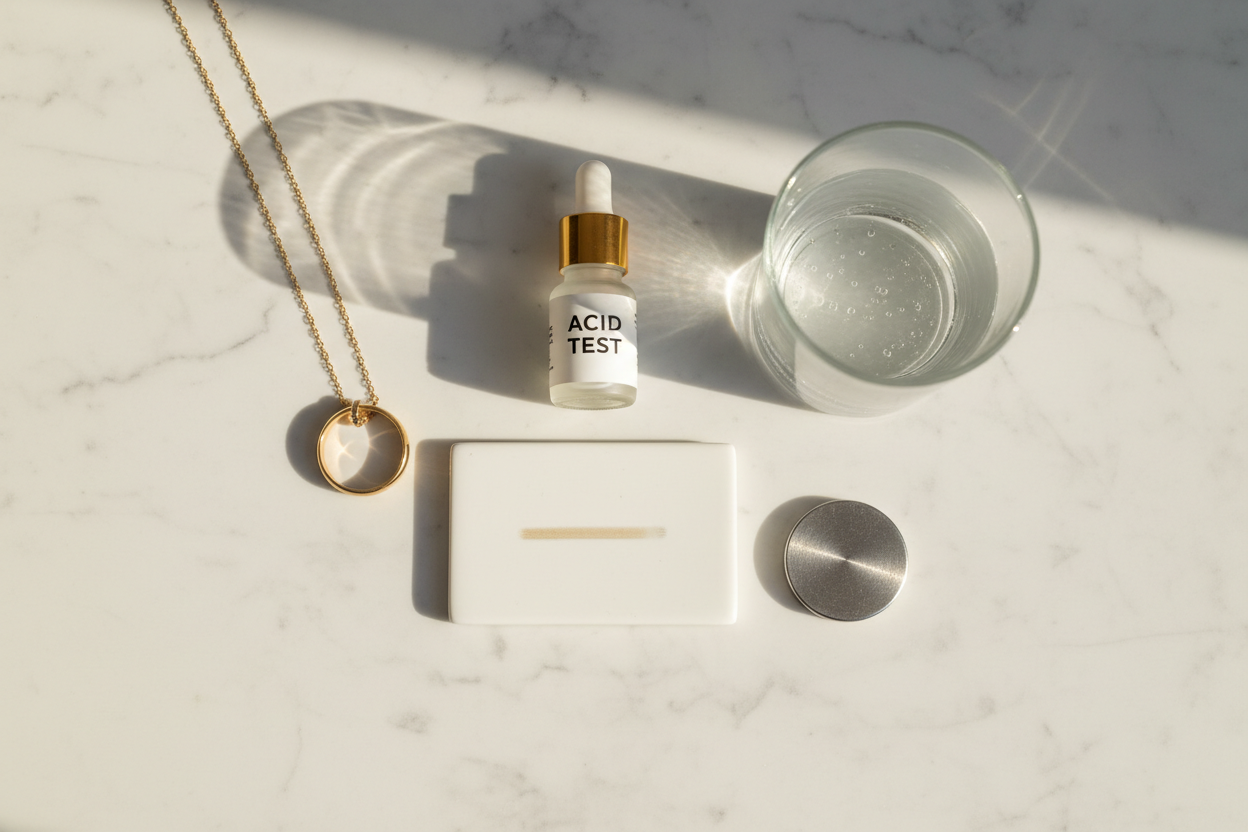
If you don’t have access to a jeweler right away, there are a few simple methods you can try at home. These aren’t 100% foolproof, but they give you a quick idea before going for a professional gold purity test.
Magnet Test
Gold is not magnetic, so if your jewelry gets strongly attracted to a magnet, it likely contains other metals. This is one of the fastest ways to start checking how to identify pure gold. Just keep in mind, some non-gold metals are also non-magnetic, so don’t rely only on this test.
Water Test
Drop the item into a bowl of water. Real gold is dense and will sink immediately, while fake or mixed items may float or move slowly. This is a simple trick often used when people want to verify gold is real without any tools.
Scratch Test (Ceramic Plate)
Gently rub the gold item on an unglazed ceramic surface.
- A gold-colored streak usually indicates real gold
- A black or gray streak may suggest fake or mixed metal
Be careful with this method, as it can slightly damage the jewelry surface, especially in delicate pieces like diamond earrings for everyday wear.
Nitric Acid Test (Advanced)
This is a more accurate method but should be done carefully. A small drop of nitric acid is applied to the gold:
- No reaction → likely real gold
- Green or milky reaction → indicates other metals
This test is best left to professionals because it involves chemicals and can damage items, especially high-value pieces like solitaire diamond jewellery.
These methods give you a basic idea, but don’t make final decisions based on just one test. Always combine multiple checks or go for professional verification when the value is high.
Professional Methods to Measure Gold Purity
Home tests can give you a rough idea, but if you’re serious about accuracy, you need professional methods. These are the techniques experts use when you want to clearly understand how to measure gold purity or how to find purity of gold without guesswork.
XRF Machine Testing
XRF (X-ray fluorescence) is one of the most modern and non-destructive ways to test gold. The machine scans the metal and instantly tells you the exact composition, including how much gold and other metals are present.
- Fast and highly accurate
- No damage to jewelry
- Commonly available at reputed jewelry stores
This is ideal for high-value items like a lab grown diamond necklace where you don’t want any scratches or chemical exposure.
Fire Assay Method (Most Accurate)
This is considered the gold standard for purity testing. The process involves melting the gold and separating impurities to measure exact purity levels.
- Extremely accurate
- Used in laboratories and refineries
- Destructive method (not suitable for finished jewelry)
Because it alters the item, this method is usually reserved for bulk gold or investment-grade material rather than wearable pieces.
Jewelry Shop Testing
Most trusted jewelers offer in-store purity testing using advanced tools like karat meters or XRF machines.
- Reliable and quick
- Often free or low-cost
- Best option for everyday buyers
If you’re buying or evaluating something like a lab grown tennis bracelet, getting it checked at a certified jewelry store is the smartest move before making any decision.
Professional testing removes doubt completely. If the value is high, don’t rely on assumptions or home tricks, get it verified properly.
Signs Your Gold Might Be Fake
Not all fake gold looks obviously fake. In fact, some pieces are made to look very convincing. But if you pay attention to a few clear signs, you can quickly spot when something isn’t right.
Discoloration
Real gold doesn’t tarnish or fade over time. If you notice color changes, dark spots, or a dull finish, it likely means the outer gold layer is wearing off and exposing another metal underneath.
Unusual Weight
Gold is a dense and heavy metal. If a piece feels unusually light for its size, that’s a red flag. Many fake items use lighter metals that reduce cost but also affect weight.
Skin Reaction
Pure gold is generally skin-friendly and doesn’t cause irritation. If wearing the jewelry leaves green or black marks on your skin, it likely contains other reactive metals like copper or nickel.
No Hallmark
A genuine piece usually has a purity stamp or BIS hallmark. If there’s no marking at all, you should be cautious. While not every authentic item has a visible stamp, most certified gold jewelry does.
These signs don’t guarantee something is fake, but if you notice more than one of them, it’s worth getting the piece professionally tested before trusting its value.
Tips to Ensure You Buy Pure Gold
Buying gold isn’t just about design, it’s about making sure you’re actually getting what you’re paying for. If you ignore basic checks, you can easily end up with low-purity or mixed metal. Here’s how to stay on the safe side.
Always Check BIS Hallmark
Before anything else, look for the BIS hallmark. This is the most reliable way to do a gold purity check without needing technical tools. It clearly tells you the karat and confirms that the gold has been tested and certified. If you’re wondering how to know gold purity quickly, this stamp is your first answer.
Buy from Trusted Jewelers
Don’t chase cheap deals from unknown sellers. A reputed jeweler protects their name and is less likely to risk selling fake or low-quality gold. This makes your gold quality check much easier because you’re starting from a place of trust. Still, don’t blindly rely on reputation, always verify.
Ask for Bill & Certification
Always take a proper bill and purity certificate. This is your proof if something goes wrong later. It also helps when you want to resell or exchange the gold. If you’re serious about how to check gold purity or how to verify gold is real, documentation matters just as much as physical tests.
Don’t Rely on Just One Method
No single test is perfect. Combine visual checks, hallmark verification, and if needed, professional testing. This is the safest way to handle any gold purity test and avoid mistakes.
Understand Before You Buy
Take a minute to understand karat values and markings before purchasing. It will help you confidently identify pure gold and avoid confusion at the store. The more you know, the harder it becomes for anyone to mislead you when you’re trying to find purity of gold or measure gold purity accurately.
If you follow these steps, you won’t have to second-guess your purchase later. Gold is valuable, treat the buying process the same way.
Quick Comparison Table (Easy Gold Purity Test Guide)
Here’s a simple breakdown to help you quickly compare different methods used for checking gold purity:
|
Test Method |
Accuracy |
Can Be Done at Home |
|
Magnet Test |
Low |
Yes |
|
Water Test |
Medium |
Yes |
|
Acid Test |
High |
Limited |
|
XRF Test |
Very High |
No |
This table makes it clear: quick home methods are useful for basic screening, but if you want reliable results, professional testing like XRF is the way to go.
Conclusion
Checking gold purity isn’t something you should take lightly. One quick test is never enough. A magnet test or water test can give you a hint, but they don’t guarantee accuracy. If you really want confidence in your purchase, combine multiple methods and always cross-check with proper markings and documentation.
The smartest approach is simple: start with a basic gold purity check at home, then confirm it through a trusted jeweler using professional tools. That’s the only way to avoid costly mistakes and make sure you’re getting what you paid for.
If you’ve been wondering how to check gold purity the right way, the answer is clear. Don’t guess, don’t assume, and don’t rely on just one method. Verify properly, especially when the value is high.
FAQs
How to check gold purity at home?
You can start with simple methods like the magnet test, water test, or ceramic scratch test. These help you get a basic idea, but they are not fully reliable. For accurate results, always follow up with a professional gold purity check using tools like XRF testing.
What is 916 gold?
916 gold means the metal contains 91.6% pure gold, which is also known as 22K gold. The remaining percentage is made up of other metals to increase strength, making it ideal for jewelry.
Can fake gold pass the magnet test?
Yes, it can. The magnet test is not foolproof because some non-gold metals are also non-magnetic. That’s why relying on a single gold purity test is risky. Always combine multiple checks or get professional verification if you want to be sure.