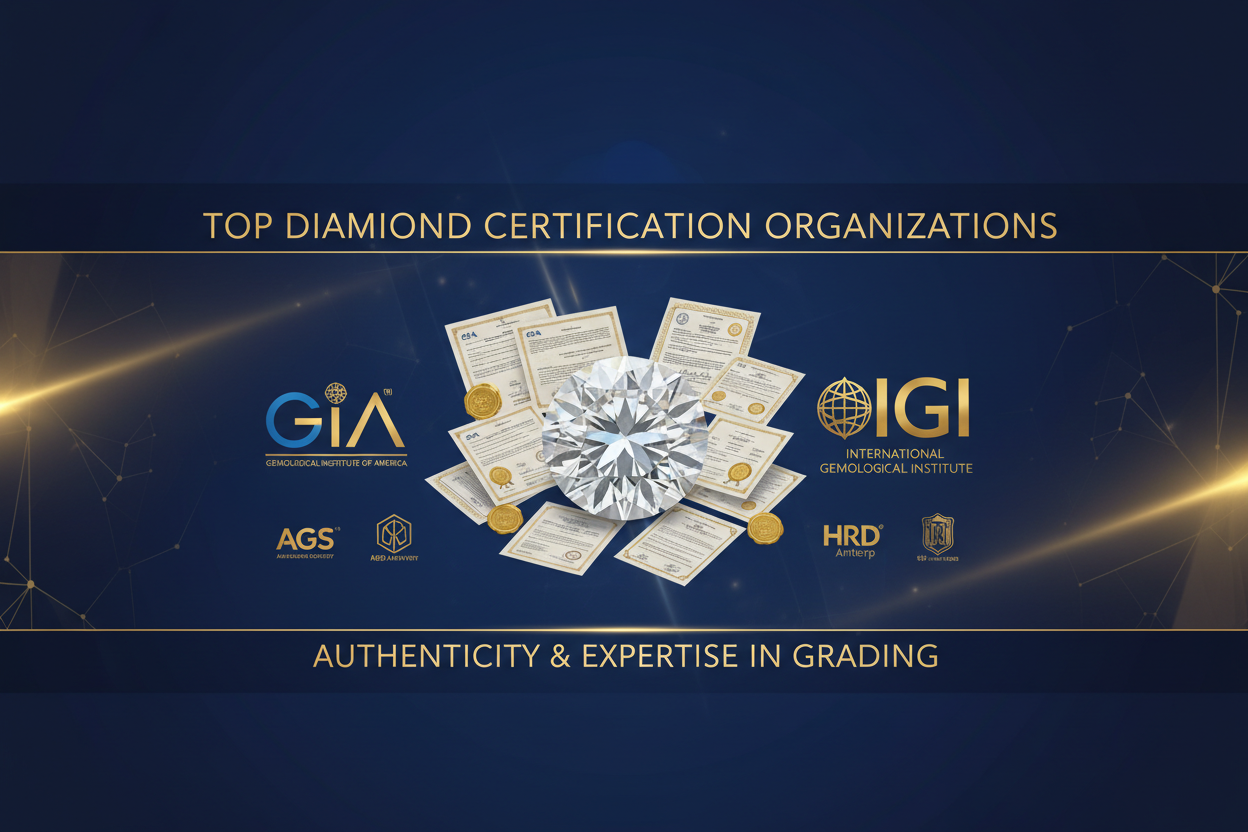
Top certifications like GIA and IGI provide unbiased 4Cs grading, fluorescence details, and origin verification for diamonds - essential for authenticity and long-term value in today's market. Every lab grown diamond certification from Xazina carries the same elite credentials as natural diamond certificates, at 25-30% less cost, with real ethical advantages built in.
What Is Diamond Certification?
A diamond certification - sometimes called a grading report or dossier - is an official document issued by an independent gemological laboratory. It details your diamond's exact characteristics against the 4Cs (Carat, Cut, Color, Clarity), along with polish, symmetry, fluorescence, precise measurements, and a plot diagram of internal and external features. This gives you an unbiased, verifiable record of what you actually own.
GIA: The Global Gold Standard
The Gemological Institute of America (founded 1931) set the benchmark for diamond grading worldwide, with a nonprofit research focus and the strictest reporting standards in the industry. GIA reports include cut proportions, the color D-Z scale, clarity plots, fluorescence strength and color, and polish/symmetry - secured with holograms, microprint, and online verification.
GIA's reputation is built on decades of consistency - it remains the preferred choice for resale and insurance purposes, and grades both natural and lab-grown stones distinctly, with natural reports additionally noting treatments and origin.
IGI: The Retail and Lab-Grown Leader
The International Gemological Institute (founded 1975) excels in comprehensive, accessible reporting through a global network of labs. Every lab grown diamond igi certificate includes a full 4Cs breakdown plus a laser-inscribed report number on the girdle for instant verification, along with growth-method details (CVD or HPHT) specific to lab-grown stones.
IGI is especially strong on synthetics and widely accepted across India and Asia for value-focused buying - making it the practical choice for engagement rings and everyday fine jewellery.
IGI vs GIA at a Glance
| Aspect | IGI | GIA |
| Reputation | Reliable, accessible | Industry gold standard |
| Cut Grading | Comprehensive | Most precise |
| Cost | More affordable | Premium |
| Lab-Grown Focus | Strong emphasis | Equally rigorous |
| Report Detail | Laser inscription standard | Laser inscription available |
In short: choose GIA when you want the most recognized name for a high-value or heirloom piece; choose IGI when you want thorough, reliable grading at better value - both protect you against fakes and misrepresentation.
Other Key Certifications Worth Knowing
HRD Antwerp - known for European precision, particularly strong on color and clarity, though less common in Indian retail.
AGS (American Gem Society) - the most cut-centric lab, home of the "Ideal" cut grade.
GCAL/Whiteflash - goes beyond standard grading with advanced light-performance and scintillation metrics.
Kimberley Process - a conflict-free mining audit, not a quality grading system, but important for natural diamond sourcing.
| Lab | Strengths | Best For | Cost (1ct Report) |
| GIA | Strict standards, resale | Investments, heirlooms | ₹8,000-15,000 |
| IGI | Lab-grown focus, detailed | Retail, engagements | ₹4,000-8,000 |
| HRD | European colour accuracy | Fancy/vivid colours | ₹6,000-12,000 |
| AGS | Cut performance | Round brilliants | ₹10,000-18,000 |
What a Certification Actually Reveals
- 4Cs breakdown: cut (excellent is the priority), colour and clarity grades, carat measurements
- Fluorescence: none or faint is preferred; strong fluorescence can make hazy D-G stones less desirable
- Treatments: HPHT colour change or clarity enhancement should always be disclosed, never hidden
- Proportions: depth and table percentages, which determine how well a stone returns light
No certificate at all means real risk of a fake or simulant - always verify a report's serial number online before buying.
Natural vs Lab-Grown Certification
Both natural and lab-grown diamonds receive identical 4Cs grading, with a few key differences:
- Natural: reports note mining origin, and clarity/fluorescence can vary more widely between stones
- Lab-grown (Xazina): reports specify the exact growth method (CVD/HPHT), with more consistent purity and typically minimal fluorescence
Both GIA and IGI clearly label lab-grown stones on the report itself - there's never any confusion about what you're buying.
Why Certification Protects Your Investment
Certification isn't just about the day you buy - it protects the value of a diamond for as long as you own it. A certified report is what insurance companies require for accurate appraisals, and it's what any future buyer or jeweller will ask to see before a resale or upgrade. Without it, proving a stone's authenticity or value later becomes far harder, whether for a claim, an inheritance, or simply passing a piece down.
Pairing a certified diamond with hallmarked metal - a form of bis certification diamond jewellery assurance - protects both halves of your purchase, not just the stone.
Xazina's Certified Excellence
Every Xazina lab-grown diamond ships with a genuine lab grown diamond gia certificate or IGI report, paired with lab grown diamond hallmark india-certified metal settings. You get the same elite verification as a natural stone, without the ethical baggage or price volatility - a smarter, more transparent way to buy.
Buyer Tips
- Choose GIA for high-value or heirloom pieces; IGI for lab-grown value buys
- Always cross-check a report's serial number online before purchasing
- Avoid any "in-house" certificate not backed by an independent lab
- Check fluorescence under UV light before finalising a purchase
FAQs: Diamond Certification
Is a lab-grown diamond certificate the same as a natural diamond's?
The grading process (the 4Cs) is identical. The only difference is that lab-grown reports specify the growth method (CVD or HPHT), while natural reports note mining origin.
Do I really need certification for a smaller diamond?
Yes - certification protects you regardless of size, since it's your only independent proof of authenticity for insurance, resale, or simply knowing exactly what you own.
Which certification should I choose, GIA or IGI?
GIA for maximum resale recognition on high-value pieces; IGI for excellent, detailed grading at better value - both are trusted and protect you against fakes.